

Documentation​​​​

This documentation section provides access to reports, summaries, presentations, survey materials, and other project resources related to the Latah County Jail. These materials are intended to help residents review the information behind the project, better understand the County’s current challenges, and stay informed as future options are considered.

Providing these documents in one place is part of the County’s commitment to transparency. As the project moves forward, this section will allow residents access to the background information, data, and public materials being used to support discussion and decision-making.


Survey Results

The Jail Project Community Survey gave Latah County demographics, statistics, project information, and community insights to utilize for the Latah County Jail Project. 

Stakeholder Interviews

Stakeholder interviews gathered insight from individuals connected to public safety, courts, probation, treatment services, legal processes, and community leadership. 

Survey Results

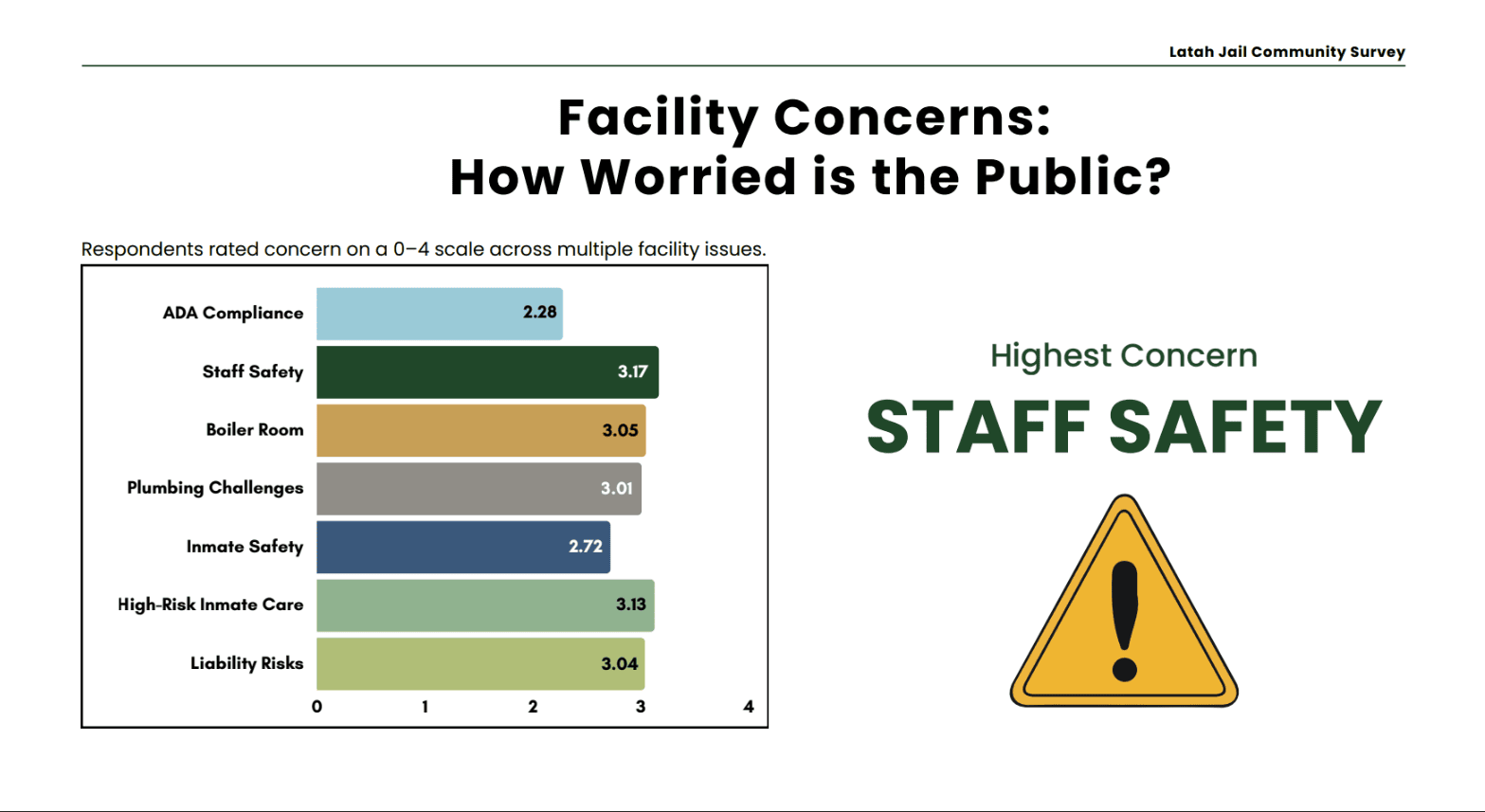
Facility Concerns

Survey respondents indicated their level of concern regarding the various challenges of the current jail facility, with staff safety ranking as the highest concern. Other major concerns included high-risk inmate care, the boiler room layout, liability risks, and plumbing challenges.
Prioritizing Solutions

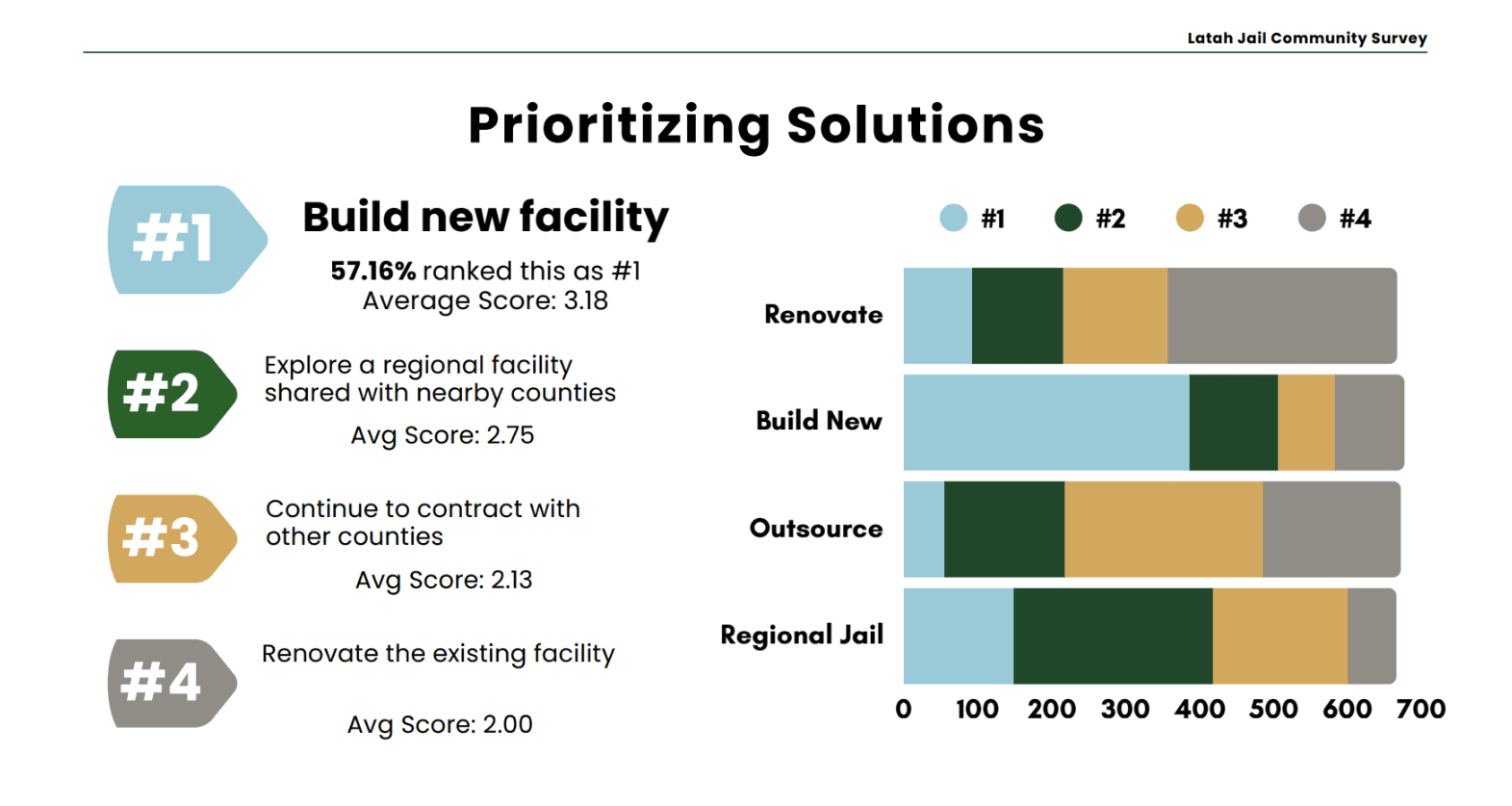
Respondents were asked to rank potential long-term solutions for the Latah County Jail. Building a new facility was the highest-ranked option, followed by exploring a regional jail shared with nearby counties, continuing to contract with other counties, and renovating the existing facility.
Local Jail Value

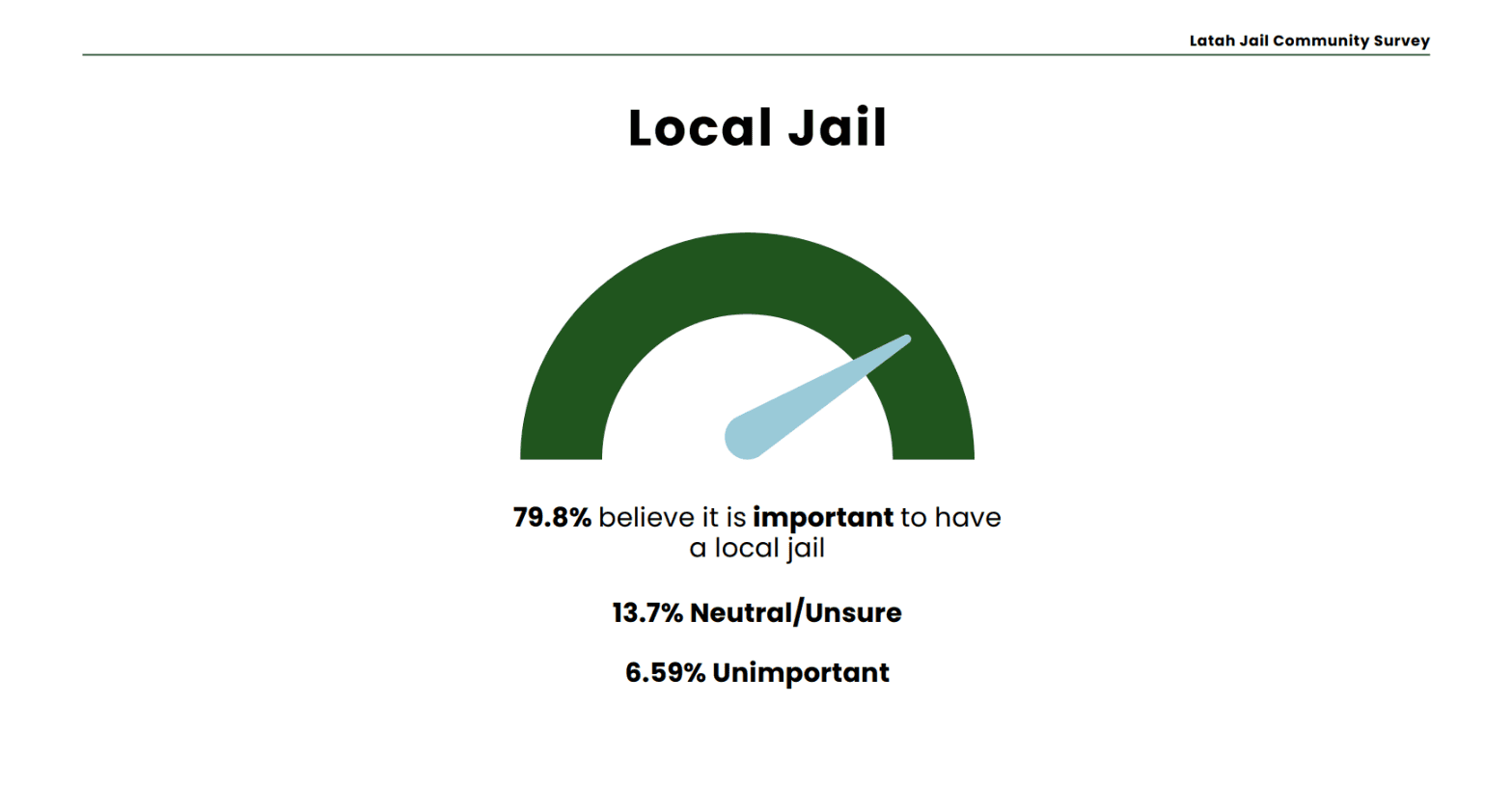
A strong majority of respondents indicated that having a local jail is important to Latah County. This feedback suggests that many residents see the jail as an important part of local public safety, court access, law enforcement operations, and community services.
Closed Jail Logistics

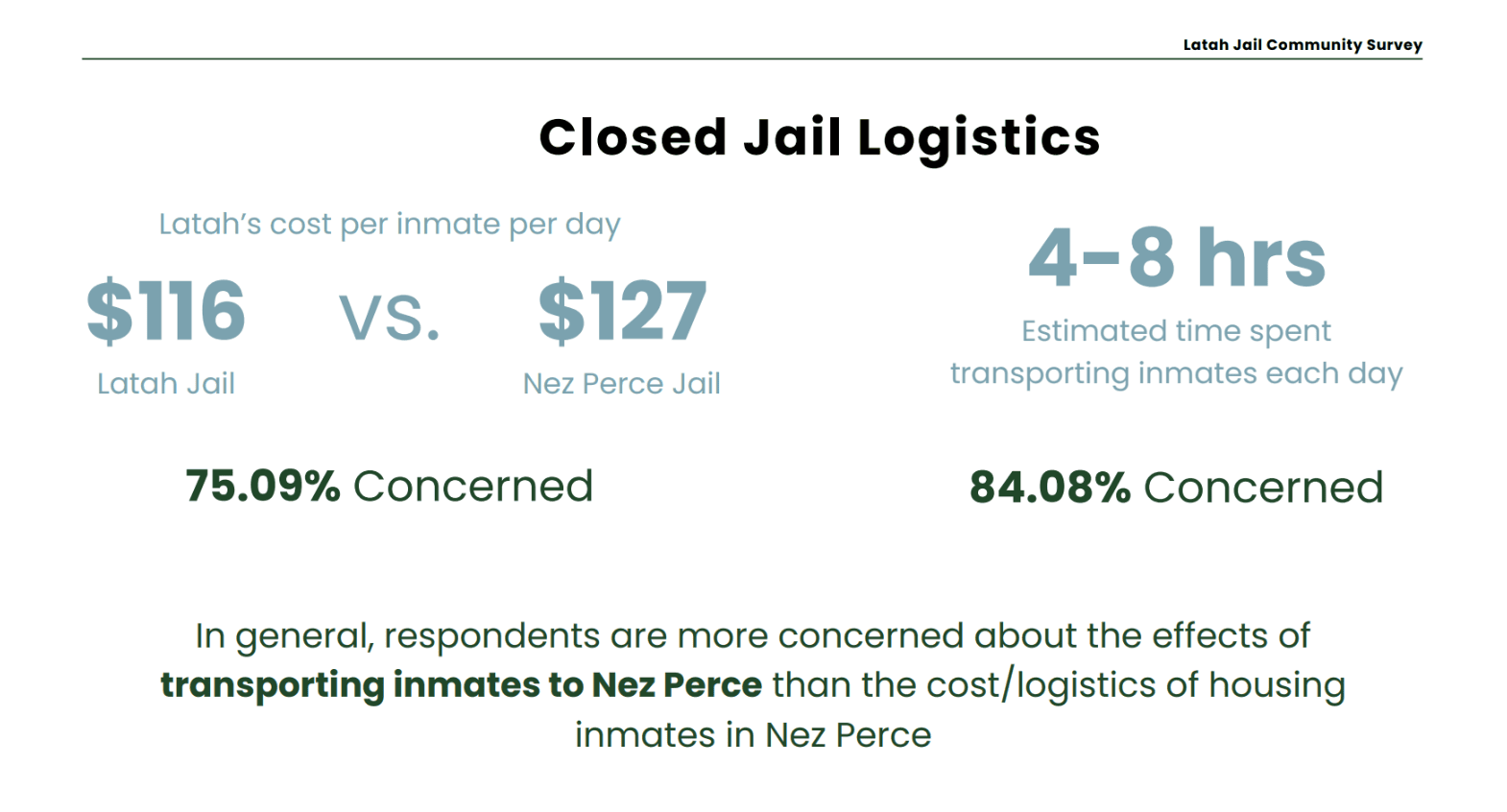
The closure of overnight housing has created added transportation and coordination challenges. Survey results show concern about the time spent transporting inmates each day, as well as the ongoing cost of housing inmates outside Latah County.
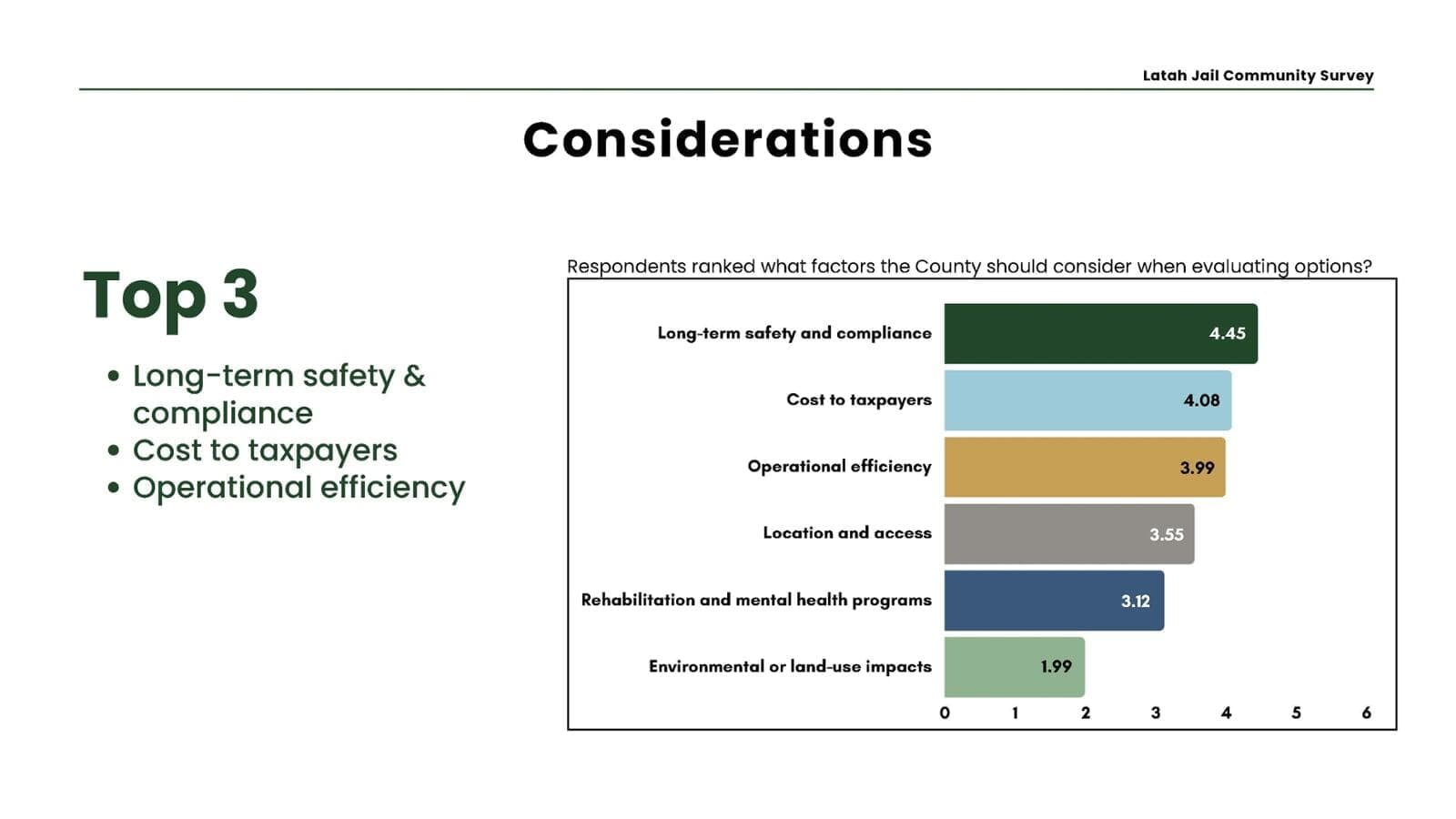

Considerations

Respondents ranked which factors the County should consider when evaluating solutions for the Jail. The top three considerations were long-term safety and compliance, cost to taxpayers, and operational efficiency.
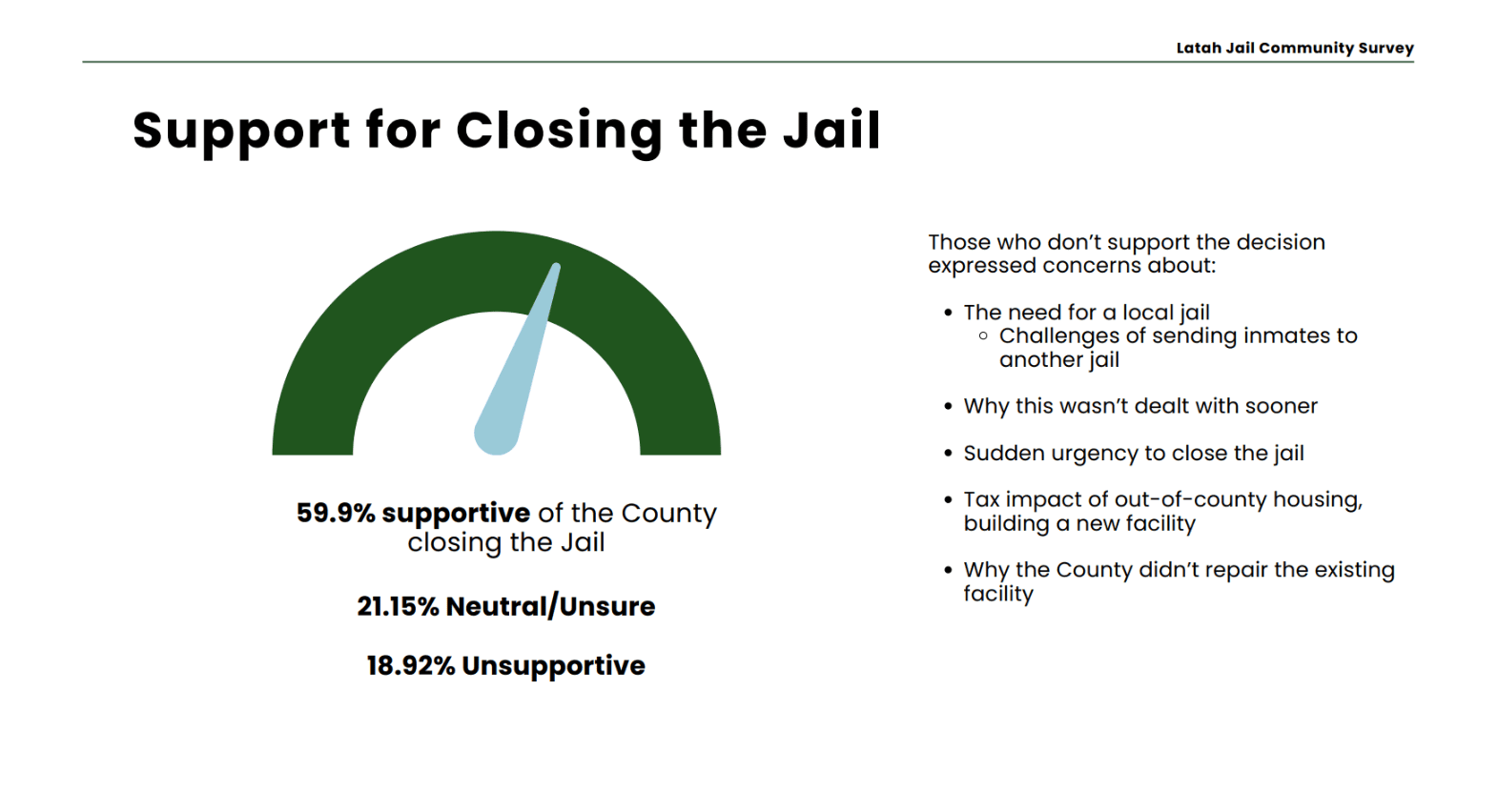

Support for Closure

Survey responses showed majority support for the County’s decision to close the jail for overnight housing. While a majority supported the decision, respondents also shared concerns about cost, urgency, and why the existing facility could not continue operating.

Stakeholder Interviews

As part of the Latah County Jail planning process, Clearwater Financial conducted stakeholder interviews with individuals connected to public safety, courts, probation, treatment services, legal processes, and community leadership. The purpose was to better understand how the current jail conditions and the closure of overnight housing are affecting local systems.

Stakeholders generally agreed that the jail issue is more than a building maintenance problem. Feedback pointed to concerns about safety, accessibility, inmate separation, outdated systems, limited space, transportation demands, court coordination, attorney access, family access, and long-term costs. Many stakeholders emphasized the need for a safe, functional, and locally responsive jail solution, along with clear public communication about the options being considered.

Key Themes from Stakeholders

  • The current jail is outdated and difficult to operate safely
  • The closure of overnight housing has created ripple effects across the local justice system
  • Transporting inmates out of county adds time, cost, and staffing pressure
  • A long-term local solution was generally preferred over indefinite reliance on another county
  • Renovating the existing jail in the Courthouse basement may not resolve long-term space, safety, and operational needs
  • Public education and transparency will be important as future options are considered

Survey Results 
​Presentation


Complete Stakeholder Interview Report